Beneath the Hida mountains, Takayama brings together Edo-period merchant streets, morning markets, festival traditions, and rail and bus routes across central Japan.
Merchant streets framed by the Hida mountains give Takayama a strong sense of place. This compact city in northern Gifu is easy to explore on foot, while Takayama Station and the neighboring bus center provide connections across central Japan.
Most visits divide naturally between the Takayama Station Area and the historic streets to the east. The station side handles arrivals, hotels, and onward travel. Across town, Takayama's architecture, markets, and food take center stage.
What the city is known for
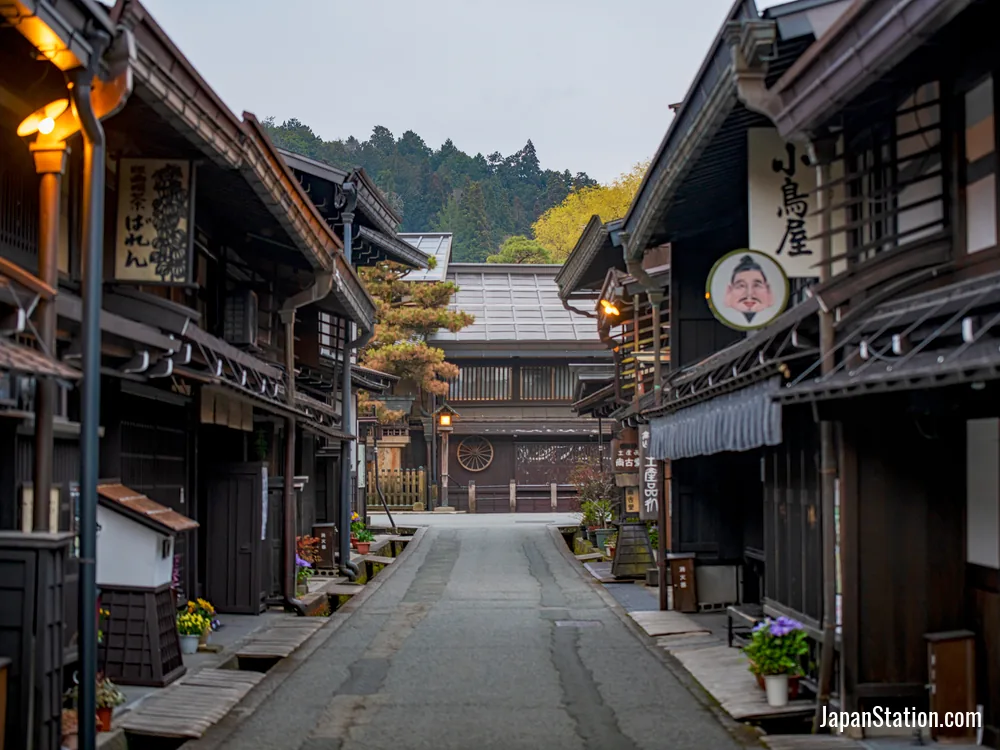
Sanmachi developed as Hida Takayama's commercial quarter, and its wooden townhouses, lattice fronts, water channels, and sake breweries still define the old town. Takayama Jinya preserves an Edo-period government office, while the Miyagawa and Jinya-mae morning markets bring produce, pickles, sweets, and crafts into the center each morning.
Held in spring and autumn, the Takayama Festival features decorated floats, processions, and evening displays. Beyond the old town, Hida Folk Village preserves more than 30 traditional buildings and demonstrates regional crafts.
Takayama Hotels
Main areas
The Takayama Station Area is the straightforward place to stay when train times, highway buses, luggage, or an early departure matter. Mercure Hida Takayama is four minutes from the station and bus center, with top-floor hot-spring baths for the end of a travel day.
Sanmachi, Takayama Jinya, and the morning markets form the main walking area east of the station. Official visitor information places Sanmachi about 12 minutes from the station and the Miyagawa Morning Market about 15 minutes away. Hida Folk Village requires a separate short bus trip rather than fitting into the old-town walk.
Getting around and onward travel
Limited Express Hida trains follow the JR Takayama Main Line toward Nagoya and Toyama. Takayama has no Shinkansen stop, so rail journeys from Tokyo or Osaka commonly require a transfer at Nagoya.
Highway buses from Takayama Bus Center serve Shirakawa-go, Kanazawa, and Toyama, with additional routes toward Matsumoto and the Okuhida hot-spring area. Within the city, the Machinami Bus covers central sights, while the Sarubobo Bus runs toward Hida Folk Village.
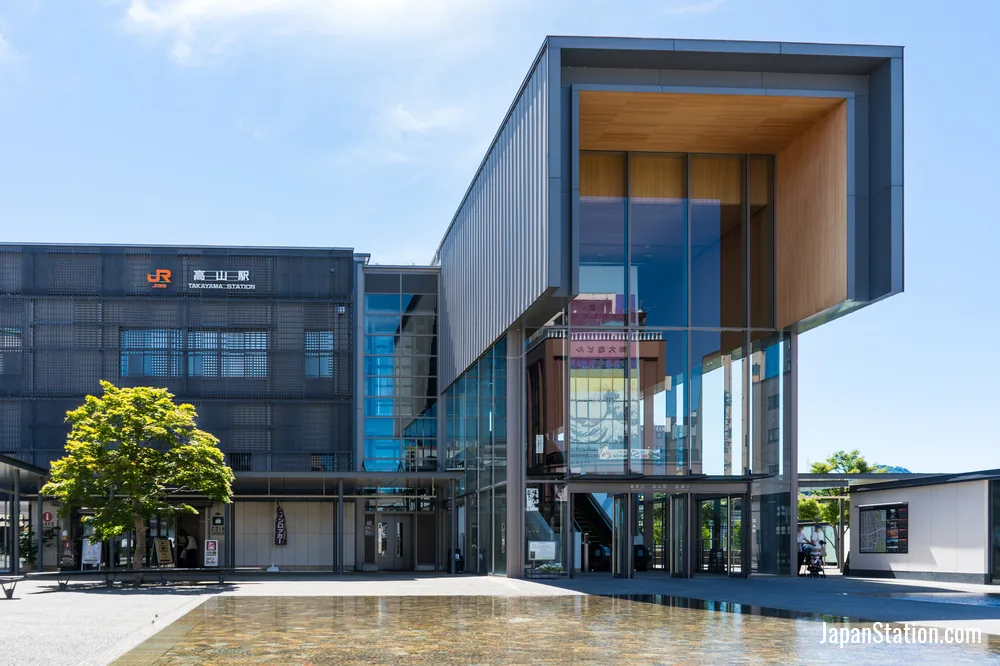
JR Takayama Station. Photo by ishikawakenmin/pixta.
Where to stay and where to go next
Stay near the station if your plans depend on Limited Express Hida trains, reserved highway buses, or a simple arrival with luggage. The old-town side favors early market visits, evening walks, and historic atmosphere over the shortest route to transport.
Takayama is also a starting point for Shirakawa-go, Hida Furukawa, Okuhida, and wider Japan Alps travel. These trips rely on different combinations of rail, highway buses, and seasonal local routes, so it's better to plan each one individually rather than treat them as interchangeable day trips.
Good to know
Some long-distance and sightseeing buses require reservations, and mountain services can be seasonal. Check the current operator timetable before building a tight connection around a specific departure.
Tokyu Stay Hida-Takayama Musubi no Yu is two minutes from Takayama Station; guests have hot-spring baths, while selected rooms add washer-dryers and kitchenettes.
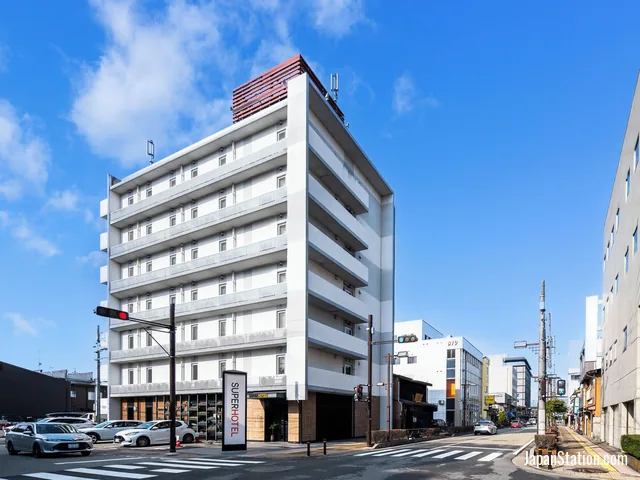
Breakfast and evening drinks are included at SUPER HOTEL Hida Takayama, close to Takayama Station; rooms are compact, and the onsen follows separate men's and women's hours.
Where to stay in this city
Compare practical stay areas by transport usefulness rather than by generic sightseeing rank.
On forested slopes southwest of central Takayama, Hida Folk Village, craft experiences, and resort stays are connected to Takayama Station by local bus.
On the western edge of central Takayama, the station area brings JR trains, highway buses, luggage services, and hotels within walking distance of the old town.
Important stations
Stations that shape hotel choice and movement around the city.
Takayama Station combines Limited Express Hida trains with nearby highway buses for travel across the Hida region and onward to Nagoya, Toyama, and beyond.
JR Takayama Main Line
More hotels in this city
Compact hotel links are grouped by stay area and include the clearest saved station access.