Direct airport trains and JR services across Hokkaido make Sapporo Station the city's main rail hub, with two subway lines and weather-protected walking routes into downtown.
Airport and intercity trains arrive on the north edge of downtown. Sapporo Station is JR Hokkaido's main hub in the city, with direct trains from New Chitose Airport, two subway lines, and the shops and hotels of the Sapporo Station Area.
Staying nearby simplifies airport arrivals, regional rail trips, and early departures. Downtown is also within easy reach, although Odori and Susukino have a different character and may be better for evenings focused on restaurants and nightlife.
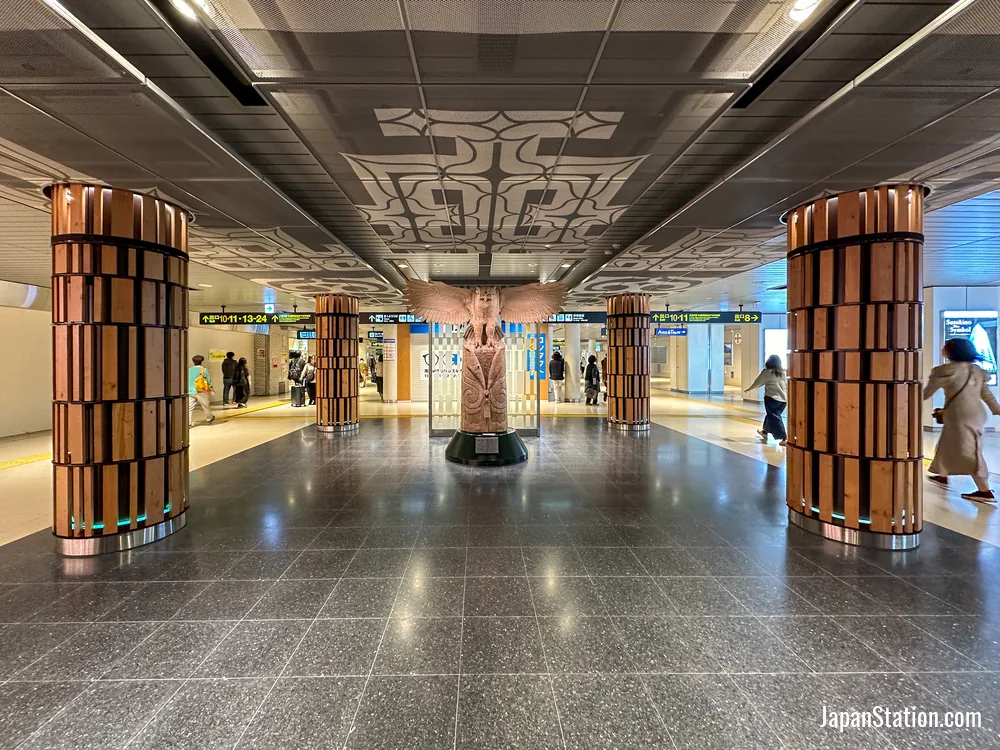
Sapporo Station underground passage. Photo by Angkana Unthaya.
Lines and connections
JR and subway services do different jobs. JR trains handle the airport, Otaru Station, and longer journeys around Hokkaido, while the municipal subway is usually more useful for travel within central Sapporo.
JR services run west toward Otaru and connect Sapporo with cities including Asahikawa and Hakodate. The Chitose Line carries trains south toward New Chitose Airport, while other local services cover the wider Sapporo area. Check the departure board carefully because trains using the same platforms may have different destinations or stopping patterns.
The connected subway station is served by the Namboku and Toho lines. Both continue one stop to Odori, where all three municipal subway lines meet. The Namboku Line is the more direct choice for Susukino Station, while the Toho Line serves the eastern side of central Sapporo and continues south toward Fukuzumi.
Sapporo Station Hotels
Airport access
Airport trains run directly between New Chitose Airport and Sapporo. The fastest service takes about 33 minutes, and six trains per hour cover the route during core daytime hours, with different stopping patterns and journey times. Most cars have non-reserved seating, while one car is reserved.
Some airport trains continue beyond Sapporo to Otaru, but not all do. If you're traveling west after arriving from the airport, check the destination before boarding or remaining on the train.
Station area
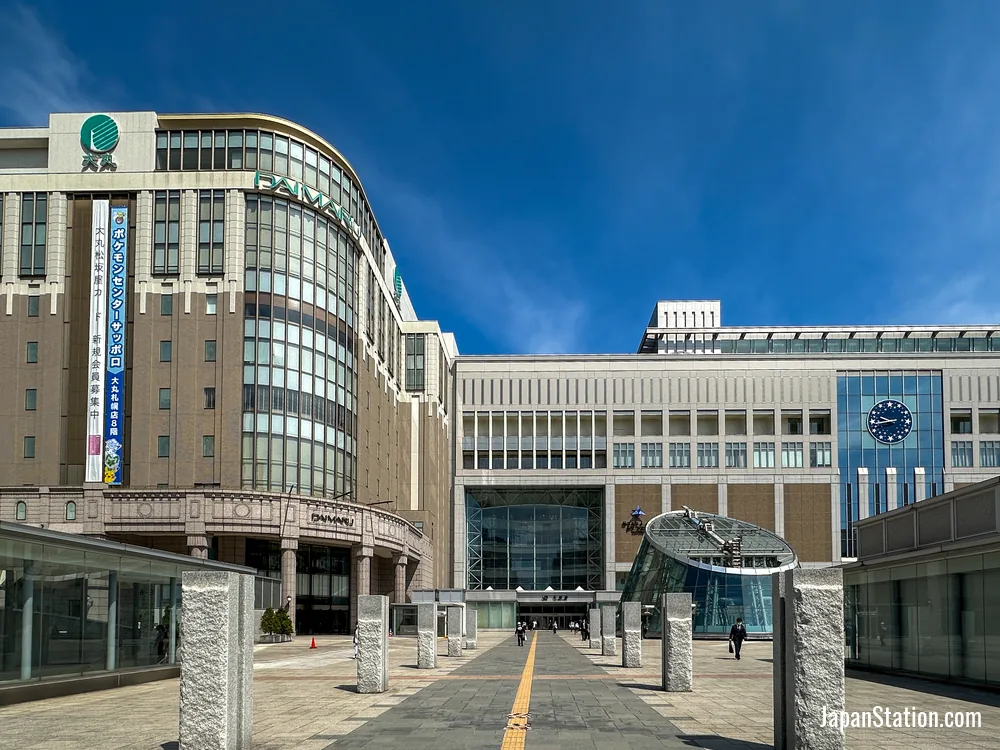
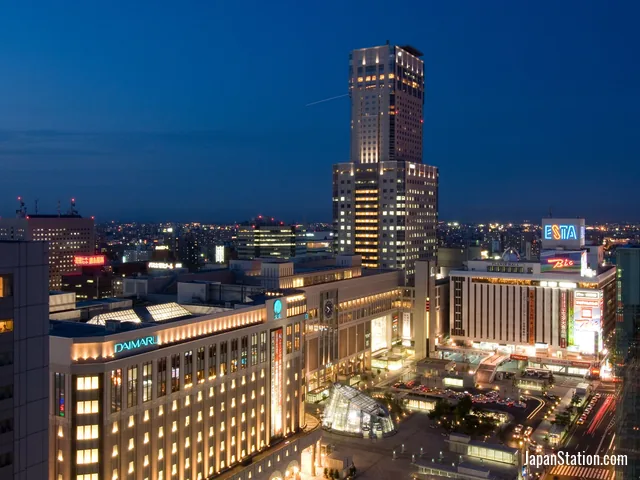
JR Tower brings shopping, food, and city views beside the rail concourse. Sapporo Stellar Place and Apia contain a broad selection of shops and restaurants, while JR Tower Observatory T38 looks across the city from above the station. JR Tower Hotel Nikko Sapporo connects directly to the JR concourse.
The district is more focused on transport and shopping than Susukino, but it keeps meals, daily necessities, and indoor places to wait close to the platforms.
What's nearby
The Sapporo Ekimae-dori underground walkway, known as Chi-Ka-Ho, connects the subway side of the station with Odori. The covered route is about 520 meters long and takes roughly ten minutes to walk, with building entrances and event spaces along the way. Connected passages continue farther south through central Sapporo.
That route matters in winter. It provides an alternative to snowy or icy street-level walks and lets you reach Odori's shops, offices, and park area without spending the entire trip outdoors.
Good to know
The JR and subway stations are linked by passageways but have separate ticket gates. Allow a little time to follow the signs when changing systems, especially with luggage or on a first visit.
Sapporo Station isn't served by the Shinkansen. Rail journeys from Tokyo and northern Honshu require a change at Shin-Hakodate-Hokuto before the limited express trip to Sapporo. Stay near the station when airport trains or early JR departures shape the itinerary. Susukino is the more immediate choice for nightlife.
Photos
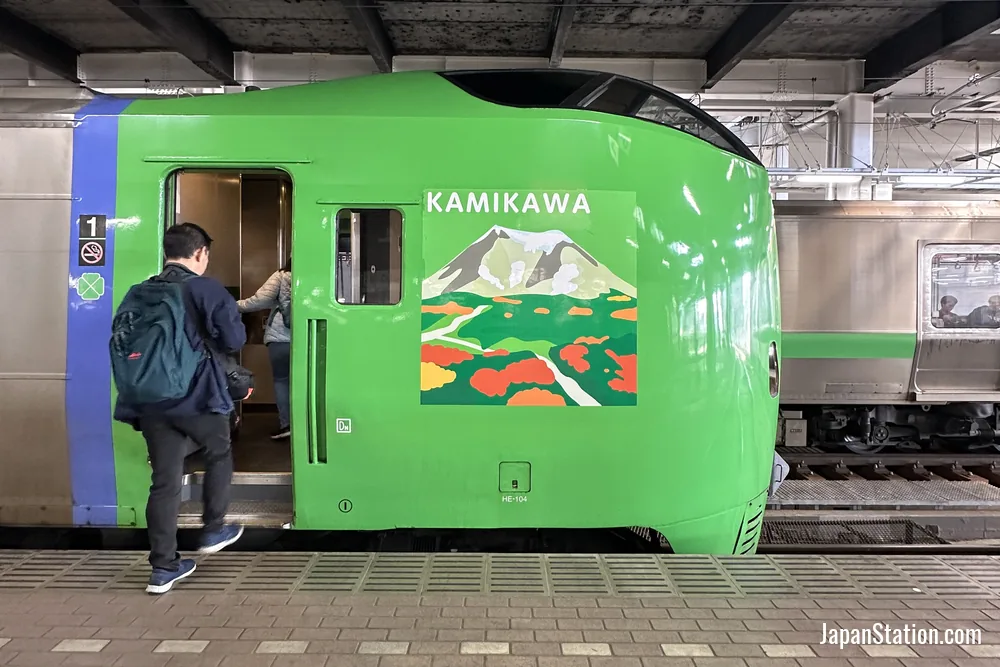
Limited Express train at Sapporo Station. Photo by Maria Fukuda.
Best visitor fit
Airport AccessShopping AreaGood for Day Trips
Main lines and destinations
Train lines and station numbers appear only on station pages.
JR Hakodate Main Line / JR Sapporo Station (01)
JR Chitose Line services
JR New Chitose Airport Rapid services
JR Gakuen-Toshi Line services
Sapporo Municipal Subway Namboku Line (N06)
Sapporo Municipal Subway Toho Line (H07)
Hotels at the station
Hotels directly at the station or within a 5-minute walk.
Above the JR Tower complex, JR Tower Hotel Nikko Sapporo combines an indoor route to Sapporo Station with high-floor views and an adults-only hot-spring spa.
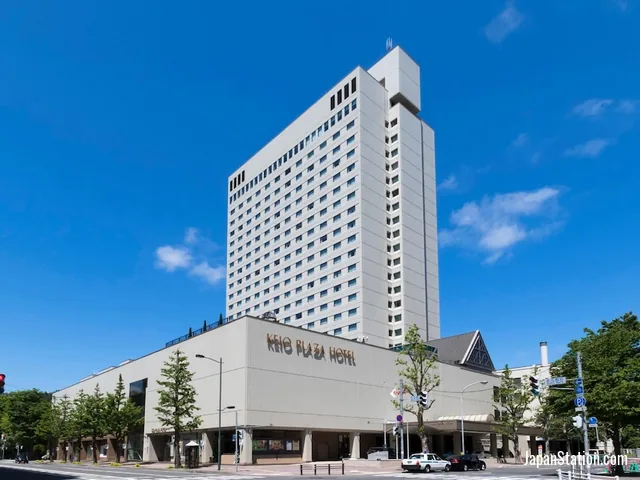
Five minutes on foot from Sapporo Station, Keio Plaza Hotel Sapporo offers a direct airport bus from its north entrance, flexible rooms for couples and groups, and two Hokkaido-focused breakfast choices.
REGIONIA by Quintessa Sapporo Sta Front puts direct airport trains about six minutes away at Sapporo Station, while Odori Park and Sapporo Clock Tower are also nearby.
North of Sapporo Station, SAPPORO HOTEL by GRANBELL puts direct JR airport trains a seven-minute walk away and adds a high-floor hot-spring spa, with Odori and Susukino farther south.
Sapporo Grand Hotel opens directly onto the city's main underground walkway, with sheltered routes from Sapporo and Odori stations and a direct New Chitose Airport bus stop.
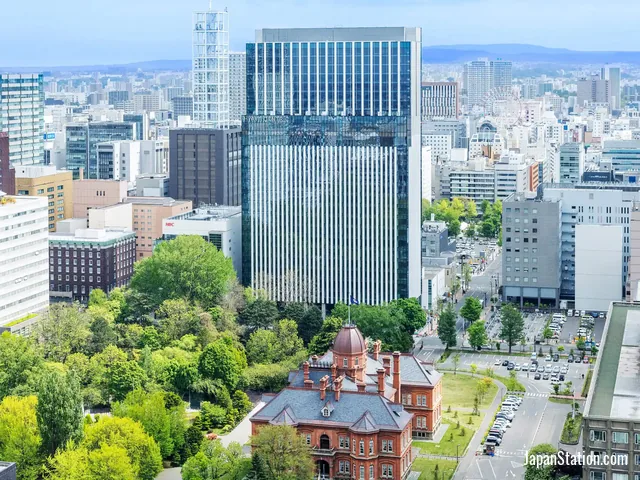
Facing Sapporo TV Tower across Odori Park, The Royal Park Canvas Sapporo Odori Park is one minute from Odori Station, with a rooftop and record players in every room.
Facing Odori Park, Hotel Resol Trinity Sapporo has subway access one minute away, selected park-view rooms, a guest bath overlooking the city, and a direct airport bus stop.