From Otaru Station, visitors walk downhill to Otaru Canal; direct trains run from Sapporo, some continue from the airport, and westbound locals head toward Yoichi and Kutchan.
The sea appears straight ahead when you leave Otaru Station. From the upper end of central Otaru, the main sightseeing route descends through the Otaru Station Area, passing former railway tracks and historic buildings before reaching Otaru Canal in about ten minutes.
This is the usual arrival point for day trips from Sapporo Station, overnight stays near the center, and selected direct trains from New Chitose Airport. It also marks an important rail boundary: continuing west toward Yoichi, Kutchan, or Niseko means changing to a local train, and IC cards can't be used beyond Otaru.
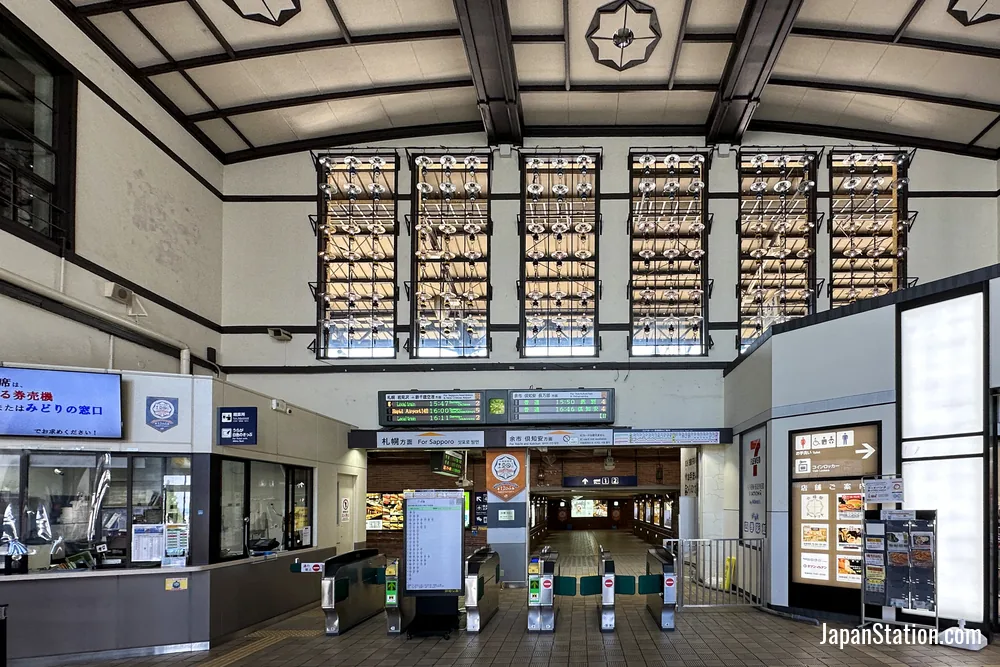
Otaru Station ticket gates. Photo by Maria Fukuda.
Station background
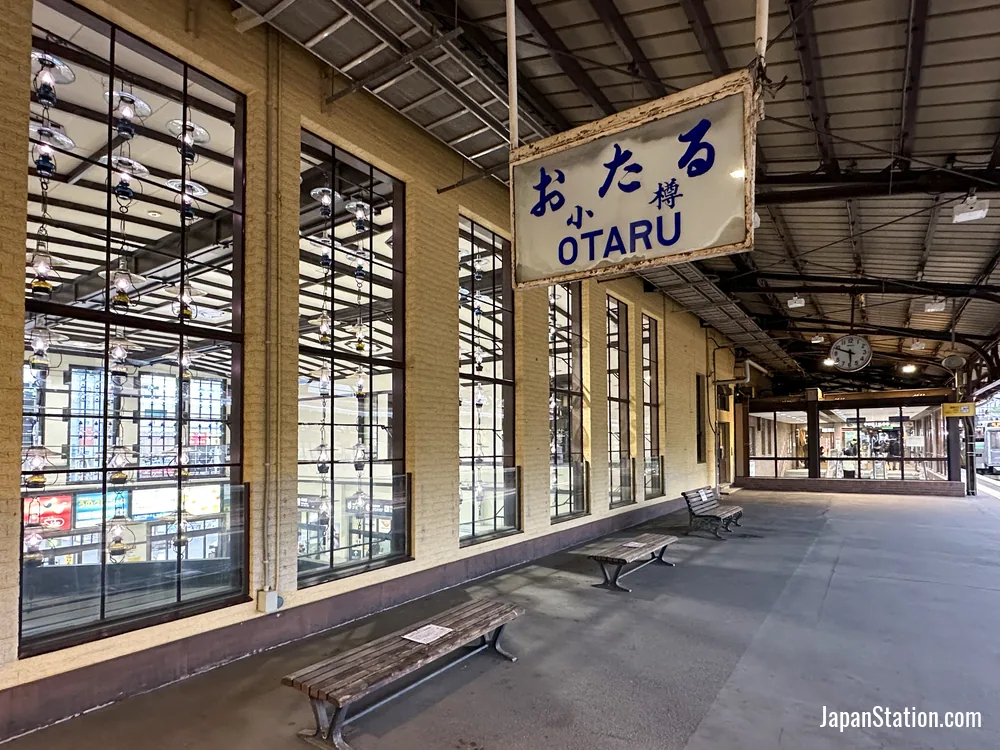
The current station building dates from 1934. Lamps throughout the concourse and platforms create a distinctive period look, while shops and places to eat occupy the concourse behind the broad station frontage.
The lamps and 1930s frontage make the station worth a quick look before heading downhill. Outside, Chuo-dori provides a clear first view toward the port.
Otaru Station Hotels
Lines and connections
Otaru is S15 on JR Hokkaido's Hakodate Main Line. Eastbound trains travel through Minami-Otaru and Otaru-Chikko toward Sapporo, and some continue through the airport rail corridor. These are the services most day-trippers use.
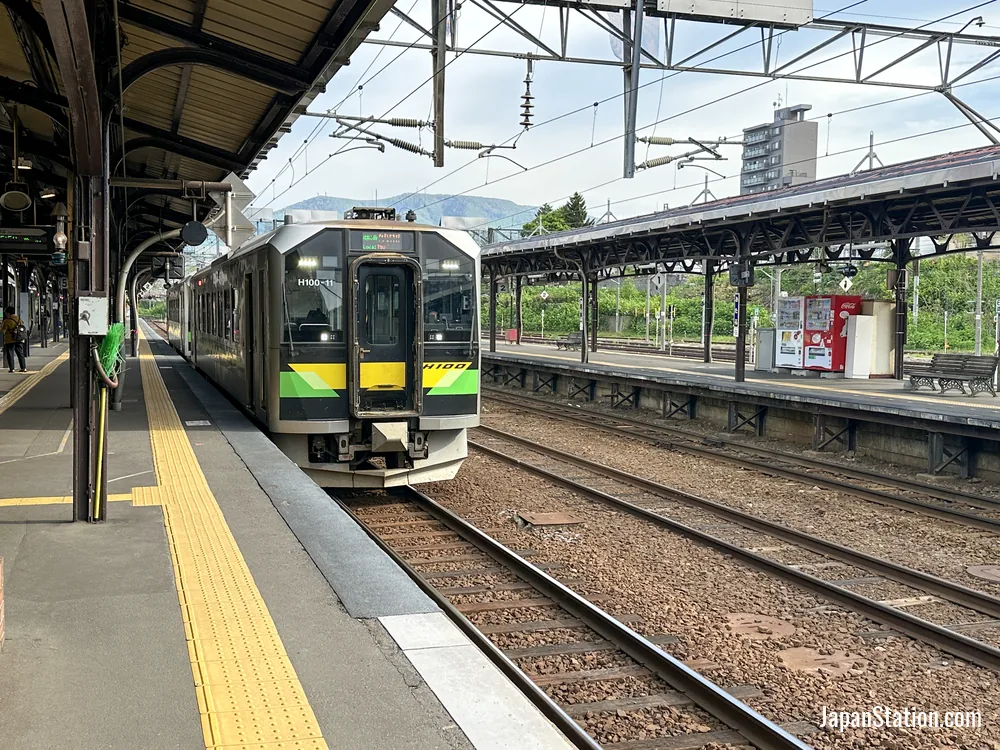
Westbound local trains serve Yoichi and Kutchan on the route toward Niseko and Oshamambe. Otaru is the transfer point between most Sapporo or airport services and these local trains, so check both departure times before planning a tight connection.
Airport access
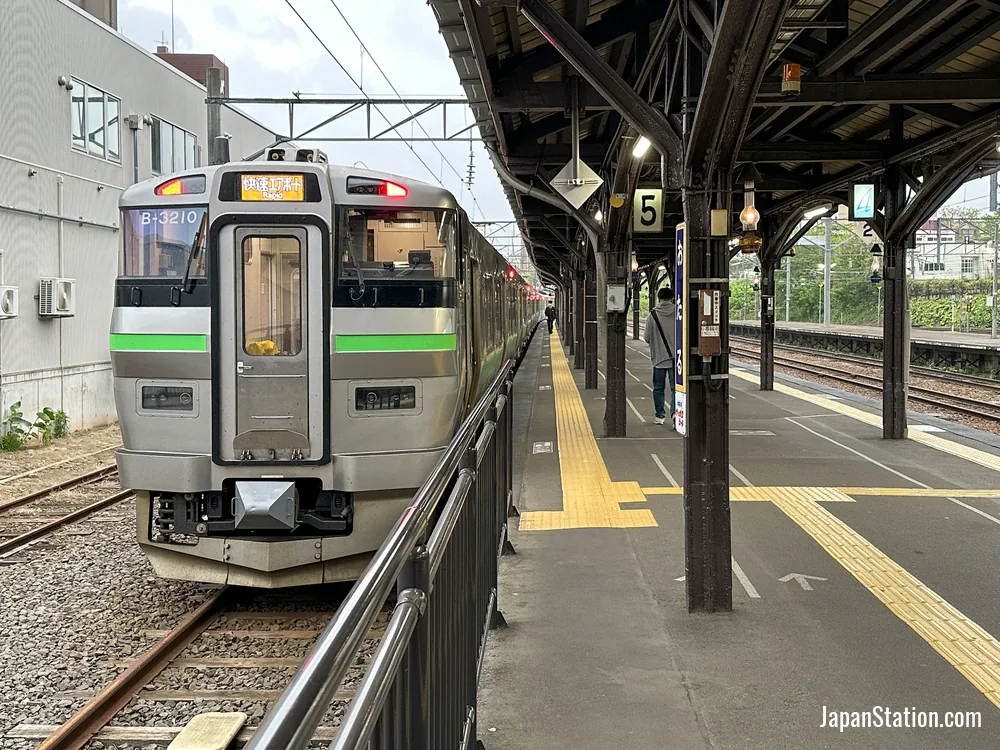
Selected Airport trains run directly between New Chitose Airport and Otaru, with the fastest journey taking about 73 minutes. Other airport trains end at Sapporo, where passengers must change for Otaru, so pay attention to the destination display.
Most seats on Airport trains are non-reserved, with a reserved car for travelers who want a guaranteed seat. A direct service can simplify the journey after a flight, but it isn't available for every departure.
Station area
The Otaru Station Tourist Information Center is just outside the ticket gates, providing maps, multilingual guidance, Wi-Fi, and umbrella loans. Coin lockers are also available. During its service hours, the information center can handle bags that don't fit or when the lockers are full.
Sankaku Market is about one minute away to the left of the station for a seafood meal or shopping before or after a train. Local buses stop directly outside and can be easier for hillier destinations, especially when snow, ice, or luggage makes walking less appealing.
What's nearby
Chuo-dori provides the simplest first route into town. The walk descends past the former Temiya Line, old bank buildings, and shopping streets before reaching the canal, its stone warehouses, and the waterfront.
The downhill direction is easy to understand once you're outside. Farther south, Sakaimachi Street continues through the glass and music-box shopping district toward Marchen Crossroads. Staying near the station makes train timing, luggage, and early departures easier to manage.
Good to know
The canal is about ten minutes away, not directly outside the station. The return walk is uphill, so allow extra time in winter or when carrying luggage. Minami-Otaru Station may be closer if you're starting around Marchen Crossroads or the southern end of Sakaimachi, although Otaru Station has a broader range of services and visitor facilities.
IC cards such as Kitaca and Suica can't be used beyond Otaru toward Yoichi, Kutchan, or Niseko. Buy a paper ticket before boarding a westbound train, and check the connection if you're arriving on an Airport service.
Photos
Airport Rapid train at Otaru Station. Photo by Maria Fukuda.Local train at Otaru Station. Photo by Maria Fukuda.
Best visitor fit
Airport AccessShopping AreaGood for Day Trips
Main lines and destinations
Train lines and station numbers appear only on station pages.
JR Hakodate Main Line (S15)
Hotels at the station
Hotels directly at the station or within a 5-minute walk.
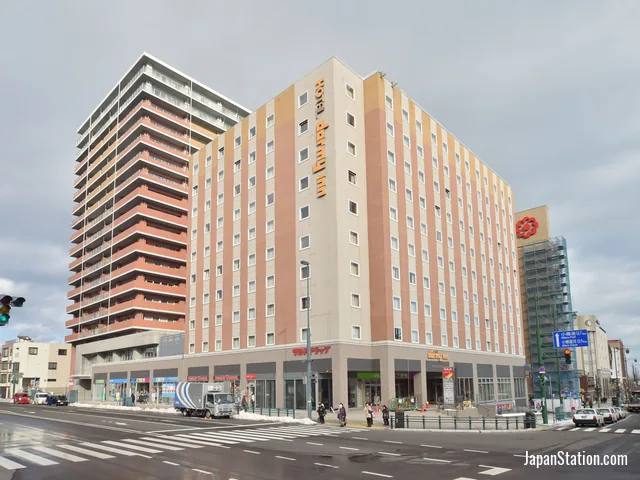
OMO5 Otaru by Hoshino Resorts is a design-minded hotel near Otaru Canal and JR Otaru Station, well suited to retro streets, a seafood-focused breakfast, and rail-based sightseeing.
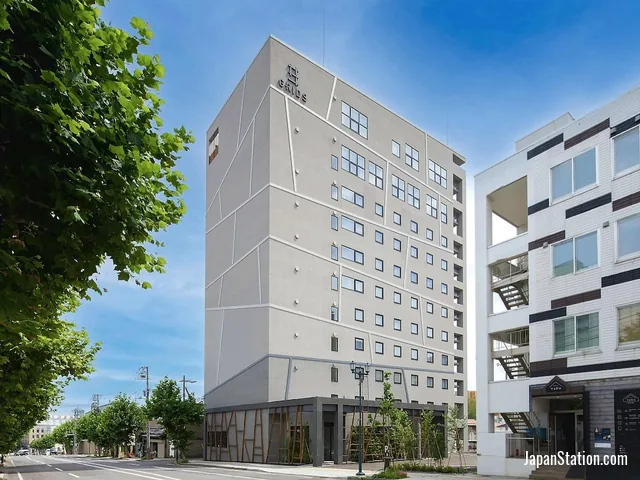
Between Otaru Station and the canal, GRIDS Premium Hotel Otaru balances walkable sightseeing with flexible family rooms and open-air bathing on the 11th floor.
Related area
Use the area page for hotel context around this station.