Overview
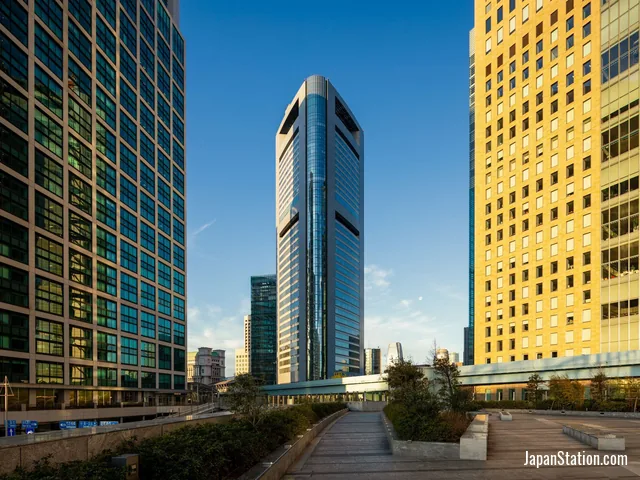
Shimbashi and Shiodome share a transport cluster, but they feel like different districts. West of the tracks, Shimbashi's narrow streets fill with after-work restaurants and bars. To the east, Shiodome is a planned district of towers, hotels, offices, and elevated walkways. The contrast is immediate.
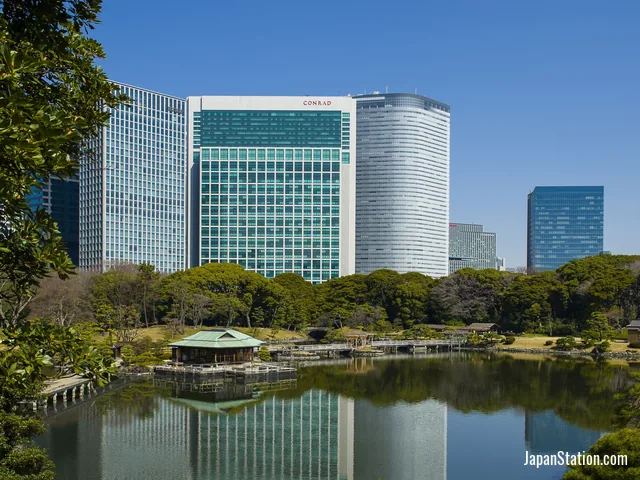
Together, they form a central Tokyo stay area between Ginza and the waterfront. It's a convenient location for business appointments and evening meals, while Hama-rikyu Gardens provides a quiet historical space beneath Shiodome's skyline.
What the area is known for
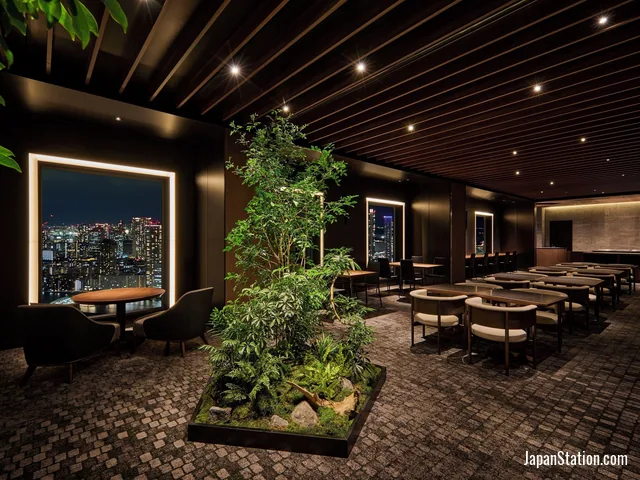
Built on a former freight rail yard, Shiodome Sio-Site brings several large buildings together around pedestrian decks and public plazas. Hotel rooms and upper-floor restaurants look across the city or toward Tokyo Bay, giving this side of the district its polished, high-rise character.
Shimbashi is older and livelier at street level. Its lanes are known for izakaya, standing bars, ramen, yakitori, and crowds from the surrounding offices. The former Shimbashi railway station also recalls the district's role at the beginning of Japan's railway history.
Main places
Hama-rikyu Gardens offers the clearest sightseeing break from the towers. Its Edo-period landscape includes a tidal pond connected to Tokyo Bay and a teahouse over the water. The public entrance is about seven minutes from Shiodome Station.
Caretta Shiodome adds restaurants and upper-floor city views, while the large clock at Nippon Television's tower is an easy stop within Sio-Site. Across the tracks, Shimbashi is more about food and local railway history than formal sightseeing.
Stations and access
Shimbashi Station is the broader transport hub. JR trains handle north-south trips through central Tokyo and routes toward Yokohama and Kamakura, while the Ginza Line connects Ginza, Asakusa, and Shibuya. The Toei Asakusa Line has selected through trains to Haneda and Narita airports, and the Yurikamome begins its waterfront route here.
Shiodome Station is closer to the tower district. The Toei Oedo Line is the better choice for Roppongi, Aoyama, and Shinjuku, while the Yurikamome continues through Odaiba and Ariake to Toyosu. Use Shiodome for hotels and offices around Sio-Site; use Shimbashi when JR, the Ginza Line, or airport through-services matter more.
Where it fits in a trip
Business trips, Ginza shopping, waterfront visits, and evenings centered on Shimbashi dining all fit naturally here. The district also suits travelers who want a full-service high-rise hotel without giving up several central rail options.
There are no Shinkansen platforms here. Tokyo Station and Shinagawa remain the main choices for bullet trains, so allow time for a short JR or taxi connection on long-distance travel days.
Good to know
Shimbashi and Shiodome aren't two names for the same station. Pedestrian passages and decks connect parts of the district, but the JR, Tokyo Metro, Toei, and Yurikamome gates occupy separate facilities. With luggage, check both the operator and the east or west side before choosing an exit.