Overview
The tracks split this district in two. East of Yokohama Station, underground passages lead to Sogo Yokohama, Yokohama Bay Quarter, and YCAT, with Minato Mirai beyond. The west side is denser. Department stores, casual restaurants, city buses, and many hotels surround its exits and underground walkways.
Stay here if you'll use several rail networks, arrive with luggage, or divide your time between central Yokohama and Tokyo. The tradeoff is scenery. Although the district reaches toward the waterfront, it doesn't replace staying in Minato Mirai or the old port districts.
What the area is known for
The east side opens toward the water. Yokohama Porta provides an underground route from the station to Sogo Yokohama and YCAT, while Yokohama Bay Quarter stands closer to the waterfront. Use this side for YCAT coaches or a walk toward Minato Mirai.
Street level is busier on the west side. Yokohama Takashimaya and Sotetsu Joinus connect directly with the station area, and the surrounding streets are packed with everyday restaurants and shops. West-side buses and taxis also depart from here.
Main places
Shopping complexes double as pedestrian routes around the station. On rainy days or when you're carrying luggage, the underground paths through Porta and Joinus can matter as much as the shops themselves.
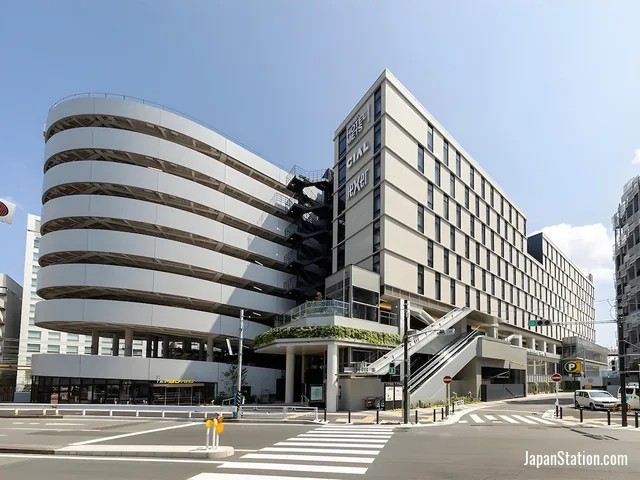
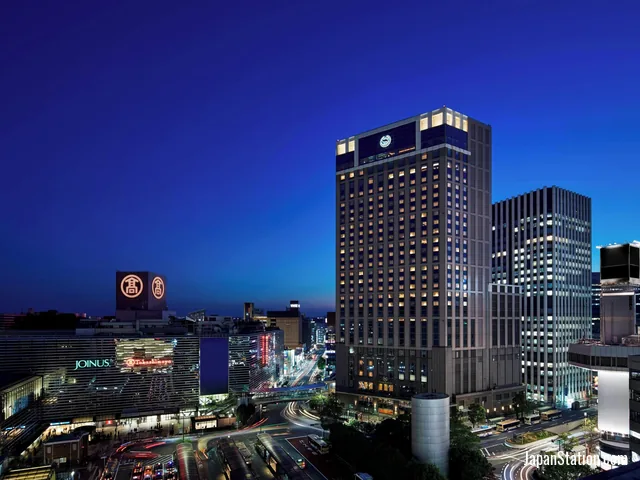
Hotel choice often comes down to the right exit. Yokohama Bay Sheraton Hotel & Towers is the full-service option on the west side. JR-East Hotel Mets Yokohama is about three minutes from the North Gate and northwest exit via a pedestrian deck.
Stations and access
JR routes run north toward Tokyo and Shinagawa, while Shonan-Shinjuku services continue toward Shibuya and Shinjuku. Tokyu Toyoko and Minatomirai Line trains connect Shibuya with Minato Mirai, Nihon-odori, and Motomachi-Chukagai through Yokohama. Sotetsu serves western Yokohama and inland Kanagawa.
Keikyu provides the clearest rail route to Haneda Airport. The trip takes about 23 minutes from Haneda Airport Terminal 3 and 28 minutes from Terminals 1 and 2. YCAT, about three minutes from the East Exit, is the district's main coach hub; check the current airport schedule before relying on a bus.
Yokohama Station has no Shinkansen platforms. The Blue Line provides a direct local connection to Shin-Yokohama Station for Tokaido Shinkansen trains.
Where it fits in a trip
Luggage-heavy arrivals, Haneda transfers, Tokyo day trips, and journeys involving several rail operators are all easier here. Meals and shopping require little planning, while the broad hotel choice lets you match a room to the exit you'll use most.
For skyline views and bayfront walks, move closer to Minato Mirai. Compare Yokohama-Kannai when Chinatown dining, Yokohama Stadium, and the old port streets matter more than the quickest route back to Tokyo.
Good to know
Yokohama Station is large, layered, and divided among several operators. Check the railway company, gate, and exit before a transfer or meeting, especially with luggage. A hotel that looks close on a map may be much less convenient if it's on the wrong side of the tracks.