Overview
Hot springs and a palm-lined seafront define this compact resort city on Sagami Bay. Hills rise sharply behind the water, opening broad sea views and making the city far more vertical than it first appears on a map.
It's close enough to Tokyo for a day trip, but an overnight stay leaves time for an onsen, the illuminated waterfront, and a slower evening after day visitors have gone. Atami Station is also an easy starting point for rail journeys farther into the Izu Peninsula.
What the city is known for
Hot springs remain central to Atami's identity. Ryokan, hotels, and day-use baths continue that tradition, while Atami Sun Beach gives the center a distinctly seaside character. Lined with palms and illuminated at night, the beach is also one of the main viewing areas for the Atami Maritime Fireworks Festival.
Beyond the waterfront, the city blends older resort culture with gardens, art, shrines, and local food. MOA Museum of Art stands above the center, while the shopping streets near the station are known for seafood, dried fish, sweets, and hot-spring buns.
Main areas
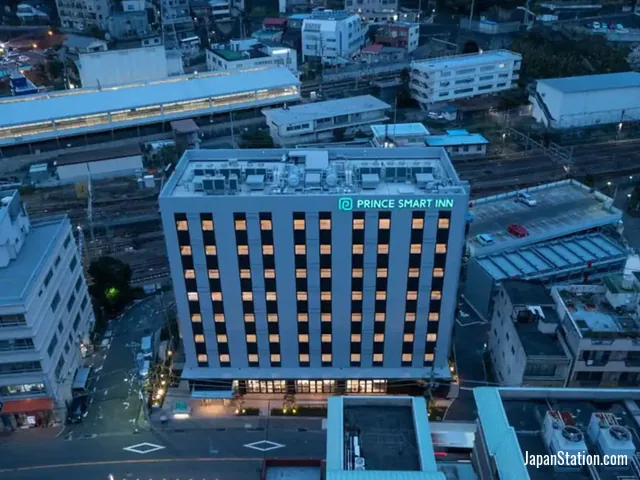
The Atami Station Area is the easiest choice for Shinkansen arrivals, luggage, buses, and a straightforward first or final night. Prince Smart Inn Atami is close to the station, with the Heiwadori and Nakamise shopping streets nearby.
The seafront and Atami Ginza side put the beach, waterfront walks, restaurants, and many hot-spring hotels closer. MOA Museum of Art and Izusan Shrine are higher on the surrounding slopes, so a bus or taxi is more comfortable than extending a waterfront walk uphill.
Getting around and onward travel
Atami Station brings together the Tokaido Shinkansen, Tokaido Line, and Ito Line. Shinkansen trains provide the fastest route from Tokyo, while conventional services follow the Tokaido corridor or turn south toward Ito and the Izu coast.
Don't underestimate the slopes. Local buses serve the waterfront, MOA Museum of Art, and other sights across the hills, sparing you a demanding uphill walk at the end of the day.
Where to stay and where to go next
Stay by the station when rail timing and luggage take priority. The seafront is the better fit when onsen time, beach walks, and evening atmosphere matter more.
The city also pairs naturally with eastern Izu, Hakone, and stops along the Tokaido corridor. Still, its hot springs and waterfront reward an overnight stay rather than treating it only as a transfer point.