Overview
The hillside around Atami Station forms the city's main arrival and hotel district, above the resort center and waterfront. Shinkansen platforms, local trains, buses, station shopping, and two traditional shopping streets are clustered close together. It's Atami's easiest area for handling luggage or catching an early departure.
There is still plenty of local character here, but this isn't the beachfront. Streets descend toward the sea, so the walk to Atami Sun Beach and the lower town is easier than the climb back.
What the area is known for
Heiwadori and Nakamise begin beside the station. Their small cafes, restaurants, food shops, and souvenir stores feel more intimate than a single modern shopping center.
Lusca Atami adds station-connected shops, restaurants, lockers, and visitor services. Just outside the station, the free natural hot-spring footbath at Ieyasu-no-Yu provides an unmistakably Atami welcome after a train ride.
Main places
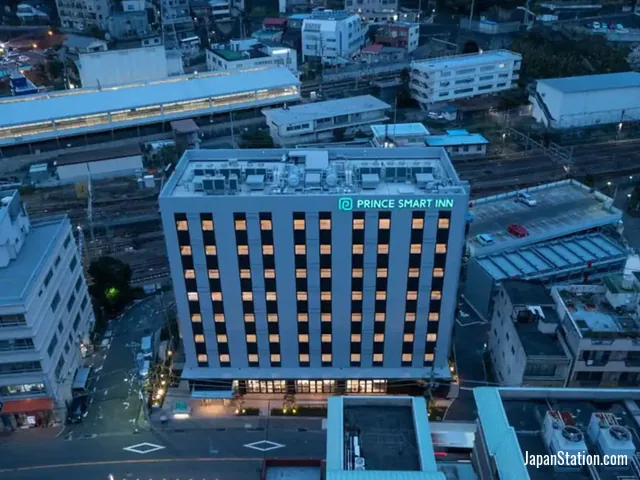
The central cluster covers the station building, Lusca Atami, the bus terminal, Ieyasu-no-Yu, and the entrances to both shopping streets. Prince Smart Inn Atami is about three minutes from the station, keeping all of them within easy reach.
MOA Museum of Art is about ten minutes away by bus on the hillside above the station. In the opposite direction, Atami Sun Beach is roughly 15 to 20 minutes downhill on foot along the route into the central resort district.
Stations and access
Atami Station serves the Tokaido Shinkansen, Tokaido Line, and Ito Line. It is the city's main rail gateway for trips from Tokyo, Yokohama, Odawara, and Shizuoka, as well as journeys along the eastern Izu coast.
The bus terminal is immediately outside the station, with services toward the waterfront, MOA Museum of Art, and sights across Atami's slopes. Check the destination before boarding, since several routes share stops in the lower town before branching in different directions.
Where it fits in a trip
Staying near the station helps with a short rail visit, a first trip with luggage, or an itinerary continuing into Izu. You can eat and shop nearby, then take a bus or follow the downhill walking route to the beach and central sights.
If you want an onsen ryokan, immediate beach access, or a waterfront evening outside the door, compare the lower town instead.
Good to know
The return from the seafront is uphill. A walk that feels easy at the start of the day may be less appealing after dinner or with bags, so the local bus can be worthwhile even when the distance looks modest.