Overview
One stop east of Tokyo Station, Shin-Nihombashi Station brings JR service to the Muromachi side of Tokyo-Nihonbashi. Its Sobu Rapid Line platforms are underground, and connecting passageways lead to the Metro complex at Mitsukoshimae Station.
This small, single-line JR station is more useful than it first appears. Take JR trains toward Tokyo or Chiba from Shin-Nihombashi, then switch to Mitsukoshimae when the Ginza or Hanzomon line better matches your plans.
Lines and connections
Shin-Nihombashi is JO20 on the JR Sobu Rapid Line, with Tokyo Station one stop westbound. Many trains continue through Tokyo onto the Yokosuka Line toward Shinagawa, Yokohama, and destinations farther south. Eastbound services call at Bakurocho, Kinshicho, and Chiba before diverging onto different routes.
Check the destination display rather than relying only on the line name. Some eastbound trains continue toward Narita Airport, while others terminate at Chiba, Tsudanuma, or another station. At Mitsukoshimae, the Ginza Line is the useful link for Ginza or Asakusa. The Hanzomon Line handles cross-city trips through Otemachi toward Shibuya.
Airport access
Selected Sobu Rapid Line trains run directly to Narita Airport, but the Narita Express doesn't stop here. Most eastbound services aren't airport trains, so check the destination before boarding. Tokyo Station offers a much broader choice of airport and long-distance services just one stop away.
There is no direct rail service from Shin-Nihombashi to Haneda Airport. The trip generally requires a transfer elsewhere in central Tokyo. If Haneda is your priority, compare the current route with options from nearby Nihombashi Station on the Toei Asakusa Line.
Station area
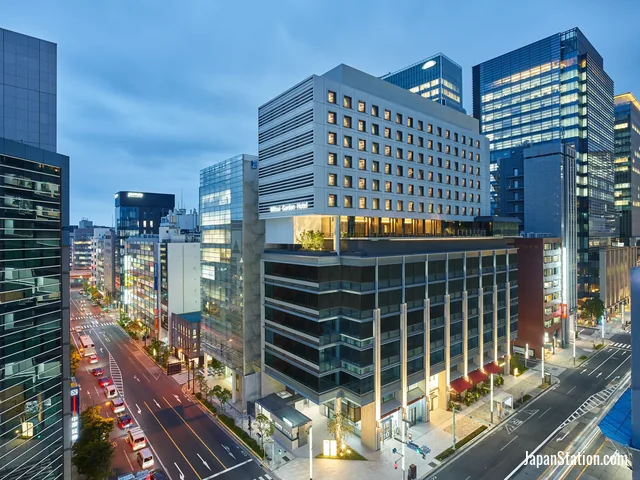
The station lies beneath Nihonbashi Muromachi, close to offices, department stores, and the Coredo Muromachi complexes. Exits 1 and 3 connect with the same underground network used by Mitsui Garden Hotel Nihonbashi Premier, while the passages toward Mitsukoshimae provide additional exits across the district.
Choose your exit before going above ground. The passageways are convenient in rain, but the underground network extends much farther than the station's two platforms might suggest.
What's nearby
Mitsui Garden Hotel Nihonbashi Premier has direct underground access from the station. Coredo Muromachi, Fukutoku Shrine, Nihombashi Mitsukoshi, and the Mitsui Memorial Museum are also nearby, while Nihombashi Bridge and the Bank of Japan lie within the wider district.
This side of Nihonbashi blends offices and polished commercial buildings with long-established shops and restaurants. It's quieter at night than Tokyo's major entertainment districts, but remains convenient for central Tokyo dining, shopping, and business.
Good to know
Three similar station names can cause confusion. Shin-Nihombashi is the JR station, Mitsukoshimae is the connected Tokyo Metro station, and Nihombashi is a separate Metro and Toei station farther south near the bridge and Takashimaya.
Shin-Nihombashi has no Shinkansen platforms. Travel one stop to Tokyo Station for bullet trains, or consider the surface walk when it better suits your luggage and departure time.