

Hotel

Banyan Tree Higashiyama Kyoto

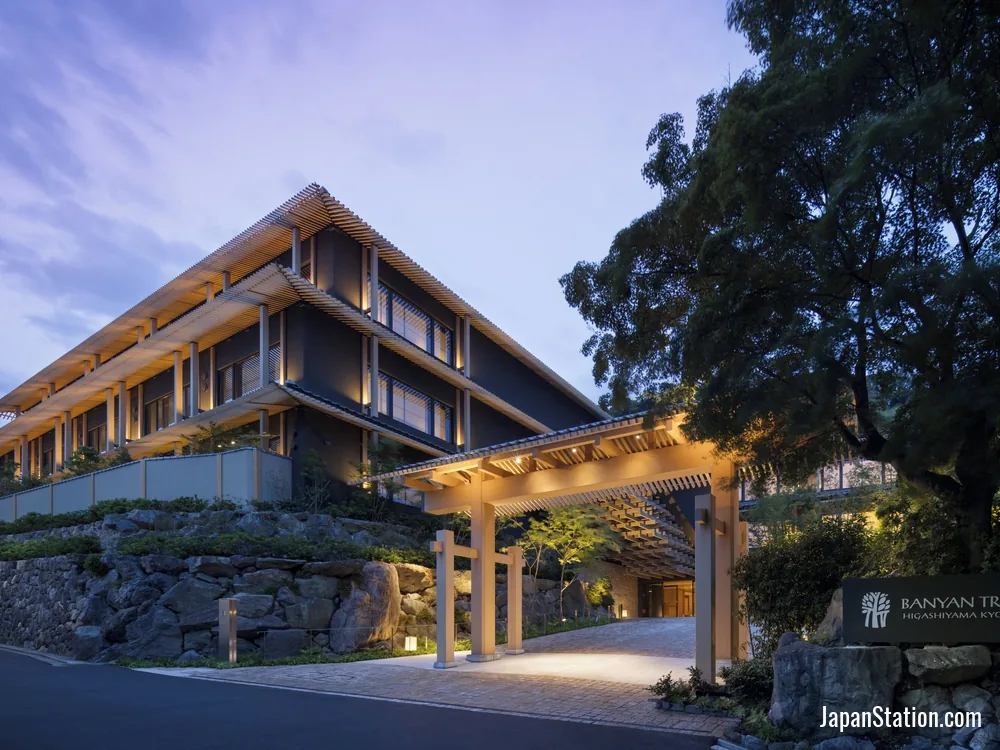
Set in the hills above Gion and Kiyomizu, Banyan Tree Higashiyama Kyoto pairs 52 design-led rooms with onsen bathing, a Noh stage, and seasonal kaiseki dining.

LuxurySubway AccessNightlife Area

Price range

Luxury

Area highlights

Subway AccessNightlife AreaQuiet Stay

Transport access and hotel guide

Overview

Banyan Tree Higashiyama Kyoto is a small luxury retreat in the hills of Higashiyama Ward, made for travelers who want Kyoto's temple-side atmosphere more than station-front convenience. The hotel occupies the former Hotel Ryozen grounds near the Kiyomizu side of Kyoto-Gion, with Yasaka Pagoda, Ninenzaka, Sannenzaka, and Kiyomizu-dera woven into the surrounding sightseeing area.

Its appeal is not an effortless roll from the train gates. It is the combination of a quiet hillside setting, contemporary Japanese design by Kengo Kuma and Associates, 52 rooms, onsen bathing, a Noh stage, and a stay shaped around culture, wellness, and walks through eastern Kyoto.

Rooms

The hotel has 52 rooms with a restrained palette, natural materials, shoji screens, tatami details, and low-profile furnishings. Every room includes a Hiba wood tub, giving even the standard categories a more bath-centered, ritual feel than a typical urban hotel room.

The eight Onsen Retreats are the clearest upgrade for guests who want private hot spring water in the room. They are especially worth considering if you plan to spend real downtime at the hotel rather than using it only as a place to sleep between temple visits.

Facilities

The most distinctive feature is the hotel's Noh stage, designed as an integral part of the property rather than a generic event space. It supports the hotel's cultural focus and gives the stay a stronger sense of place than a standard luxury lobby or lounge.

Wellness is the other major draw. Guests have access to onsen bathing, a spa with six treatment rooms, hot spring-fed treatment tubs, a sauna, steam room, relaxation area, and gym. The atmosphere is calm, and the property rewards guests who set aside part of the day to stay in.

Dining

Dining centers on Ryozen, the hotel's Japanese restaurant. Its focus is seasonal kaiseki built around local ingredients, making dinner feel like part of the stay rather than simply an in-house convenience.

The bar highlights sake and also serves as an afternoon tea space during the day. It gives guests a quiet place to pause between sightseeing plans, especially on days built around nearby temple walks rather than a full cross-city itinerary.

Location and transport

Banyan Tree Higashiyama Kyoto is best understood as a hillside Higashiyama stay, not a hotel beside a station. Gion-Shijo Station and Kiyomizu-Gojo Station are the relevant east-side rail anchors, but the final approach depends on local routing, walking conditions, luggage, and taxis more than on a simple station-front transfer.

That tradeoff matters. You gain immediate access to the Gion and Kiyomizu sightseeing side of Kyoto, but the Shinkansen and airport-rail logistics are less direct. Travelers arriving through Kyoto Station should plan the last leg carefully rather than assuming a short, flat walk from a train platform.

Why stay here

Stay here if you want a quiet, high-touch Kyoto experience with design, bathing, dining, and cultural programming built into the property. It suits slower east-side itineraries better than trips centered on early train departures or repeated rail day trips.

The surrounding area is one of Kyoto's strongest sightseeing zones. Kiyomizu brings historic temples, Kiyomizu-dera, Yasaka Pagoda, pottery traditions, and souvenir streets, while Gion adds traditional lanes, restaurants, cafes, bars, and evening atmosphere.

Good to know

This is not a rail-side hotel. If the simplest luggage transfer from Kyoto Station is a priority, compare hotels around the main station or arrange the final taxi or local-transport leg before arrival.

Nearest station

Check the key stations linked to this hotel and its main transport connections.

Surrounding area

See how this area fits into the wider area for hotels, dining, and transport.

Kyoto city

Kyoto-Gion

Kyoto-Gion is Kyoto's historic east-side district, known for traditional streets, Gion-Shijo access, Yasaka Shrine, Kenninji, Kamo River walks, and atmospheric evenings.

Last verified by Maria Fukuda on 06-Jul-2026.