Overview
Conventional trains and buses make Aizu-Wakamatsu Station the gateway to Aizuwakamatsu's castle, samurai sites, hot springs, and the wider Aizu region. It isn't a Shinkansen stop, so the usual journey from Tokyo involves changing from the Tohoku Shinkansen to the Ban-etsu West Line at Koriyama.
The station anchors the Aizuwakamatsu Station Area, where hotels, buses, taxis, and visitor services help with onward travel. The main historical sights are not immediately outside the station.
Lines and connections
The Ban-etsu West Line runs east to Koriyama and west through Kitakata toward Niitsu. Services depart in both directions, and Aizu-Wakamatsu acts as the turning point between the main Aizu city and the line's eastern and western sections.
The Tadami Line heads toward Aizu-Kawaguchi and Tadami. Some Aizu Railway trains continue through Nishi-Wakamatsu to Aizu-Wakamatsu, providing a route south toward Aizu-Tajima and connections in the direction of Asakusa.
Station area
Local and highway bus stops are near the station, which is also the starting point for the Haikara-san sightseeing loop. Taxis and rental bicycles provide alternatives when the bus timetable doesn't fit your plans.
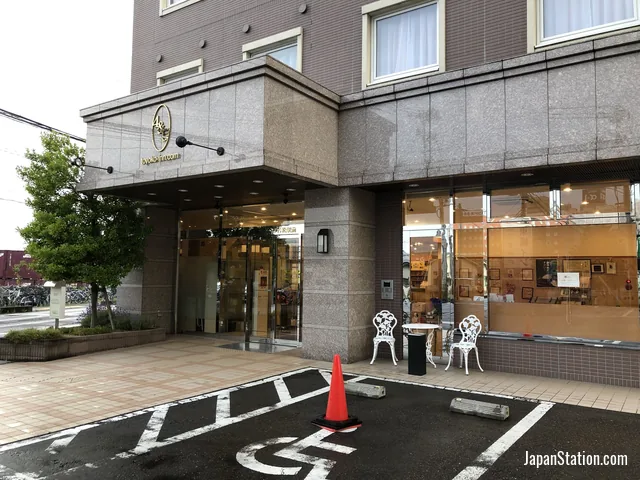
Nearby accommodation favors straightforward arrivals and departures. Toyoko Inn Aizuwakamatsu Ekimae is two minutes away on foot.
What's nearby
The station is outside the main historical cluster. Allow about 20 minutes on the Haikara-san bus to Tsurugajo Iriguchi, followed by another five minutes on foot to Tsuruga Castle.
The same loop continues through Higashiyama and Iimoriyama before returning to the station. A bus or bicycle helps combine Nanukamachi's old commercial streets with Oyakuen and Aizu Bukeyashiki.
Good to know
Don't plan around a direct Shinkansen arrival; the usual route from Tokyo requires a change at Koriyama. Local and sightseeing services are less frequent than urban transit, and the Haikara-san interval may change in winter, so check the day's outward and return times before leaving the station.